Owner-Dependent Business? Why the Business Only You Can Run Is Worth Less Than You Think

The Business Only You Can Run Is Worth Less Than You Think
An owner-dependent business is one of the biggest reasons business owners leave money on the table when they sell. A few months ago I got on the phone with the owner of a residential HVAC company here in the Hudson Valley. Good business. Loyal customers. Trucks paid off. The kind of company an entire town runs on without ever thinking about it.
I asked him one simple question.
“If you disappeared for the next 90 days, what happens?”
He paused.
Then came the answer.
“It falls apart.”
That pause told me everything I needed to know.
It’s also one of the most expensive moments a business owner can have.
Because if your company can’t operate without you, buyers don’t see strength.
They see risk.
Why Owner Dependency Hurts Business Value
When you’ve spent twenty years building a company, you naturally become the operating system.
The pricing strategy lives in your head.
Your biggest customers call your personal cell phone.
You know exactly which technician should handle which job.
You know which vendor answers after hours.
You know which projects will become nightmares before anyone else does.
That feels like leadership.
To an acquirer, it feels like concentration risk.
When someone wants to buy a business, they’re not purchasing your history.
They’re buying future cash flow.
If the future depends entirely on the owner who’s leaving after closing, then what exactly are they buying?
That’s why an owner-dependent business almost always receives a lower valuation.
Transferable Value Determines Your Exit Price
One phrase drives business value more than most owners realize:
Transferable value.
Transferable value is everything that continues producing results after the owner leaves.
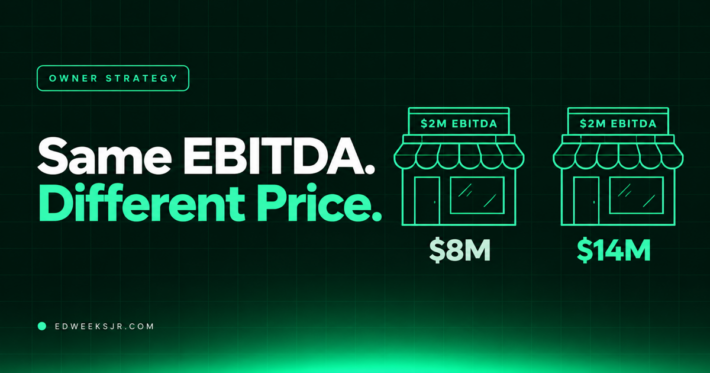
I’ve seen two companies with nearly identical revenue and EBITDA receive dramatically different offers.
The financials weren’t the difference.
The transferability was.
Businesses with strong systems, documented processes, leadership teams, and customer relationships that belong to the company—not the owner—command higher multiples.
Owner-dependent businesses usually face:
- Lower purchase offers
- Larger earnouts
- Longer transition periods
- More buyer concerns during due diligence
- Deals that never reach the closing table
The business may be profitable.
But profitable doesn’t automatically mean sellable.
How to Reduce Owner Dependency Before Selling Your Business
The good news?
Fixing an owner-dependent business doesn’t mean rebuilding your company overnight.
You simply need to start transferring value.
1. Build a True Second-in-Command
If nobody can run the company without calling you, this is your biggest opportunity.
Hiring or developing a strong operations leader is often one of the highest-return investments you’ll ever make before an exit.
2. Document Everything That Lives in Your Head
Write down:
- Pricing methodology
- Sales process
- Vendor relationships
- Customer onboarding
- Hiring procedures
- Operational workflows
- Decision-making frameworks
If it only exists in your memory, buyers won’t pay full price for it.
3. Let the Business Own Customer Relationships
Your customers should know your company—not just you.
Move communication into company email addresses, CRM systems, and shared processes.
The more relationships belong to the business, the more valuable the business becomes.
4. Stress-Test Your Business
Take two weeks completely away.
Don’t answer emails.
Don’t answer calls.
Don’t rescue anyone.
Everything that breaks becomes your roadmap for increasing business value.
The Best Exit Strategy Starts Years Before You Sell
Many owners assume they’ll fix these issues after receiving an offer.
By then, it’s usually too late.
The businesses that sell for premium valuations aren’t necessarily the biggest.
They’re the ones that buyers believe can continue growing without the founder.
If you’re planning to sell your business within the next three to five years, making yourself less essential may be the highest ROI project you’ll ever undertake.
Ironically, the less your company needs you, the more valuable it becomes.
An owner-dependent business rarely commands a premium valuation, no matter how strong the numbers look. Independent frameworks like this business valuation guide can help you see the gap before a buyer does.
Ready to Find Out Where You Stand?
If you’re wondering whether your company is truly ready for a sale, start with an objective assessment.
The Business Optionality Assessment helps business owners identify the biggest factors affecting valuation, buyer confidence, and deal structure before going to market.
Take the free Business Optionality Assessment and see where your business stands today.